The Book of Beardcraft
How to Style a Beard That Grows in Multiple Directions
If your beard seems to have a mind of its own, growing straight on one side and curling on the other, swirling under you...
The Book of Beardcraft
If your beard seems to have a mind of its own, growing straight on one side and curling on the other, swirling under you...
If your beard seems to have a mind of its own, growing straight on one side and curling on the other, swirling under your chin, or sticking out near your ears, you are dealing with one of the most common beard challenges there is. Multi-directional growth is not a flaw. It is just how your […]
 matt
1 month ago
matt
1 month ago
If your beard seems to have a mind of its own, growing straight on one side and curling on the other, swirling under your chin, or sticking out near your ears, you are dealing with one of the most common beard challenges there is.
Multi-directional growth is not a flaw. It is just how your follicles are oriented. But it can make styling frustrating if you do not understand what is happening and how to work with it.
The good news is that most multi-directional beards can be trained, managed, and styled into something that looks intentional. It just takes the right approach.

Every hair on your face grows out of a follicle that is angled in a specific direction. Unlike scalp hair, which tends to follow fairly consistent patterns, facial hair follicles are angled in a variety of directions across different parts of the face.
This is determined by genetics. You cannot change the angle of your follicles, but you can influence how the hair behaves once it grows past a certain length.
Shorter beards tend to show directional differences more, because the hairs are stiff enough to hold their natural angle. As the beard gets longer, gravity and grooming habits start to pull things into a more unified look.
Certain areas of the face are worse than others when it comes to multi-directional growth.
Under the chin is the most common trouble spot. Hairs here often grow forward, backward, and sideways in unpredictable patterns. This creates a messy, tangled look underneath the jaw that is hard to control at shorter lengths.
The cheeks can grow in two different directions, with hair near the ear pointing down while hair closer to the mouth grows outward. This creates a subtle unevenness that becomes more noticeable when the beard is trimmed short.
The mustache area sometimes grows with a noticeable split or cowlick effect, where hairs naturally push apart instead of laying flat.
None of these are unusual. Most beards have at least one of these patterns going on.
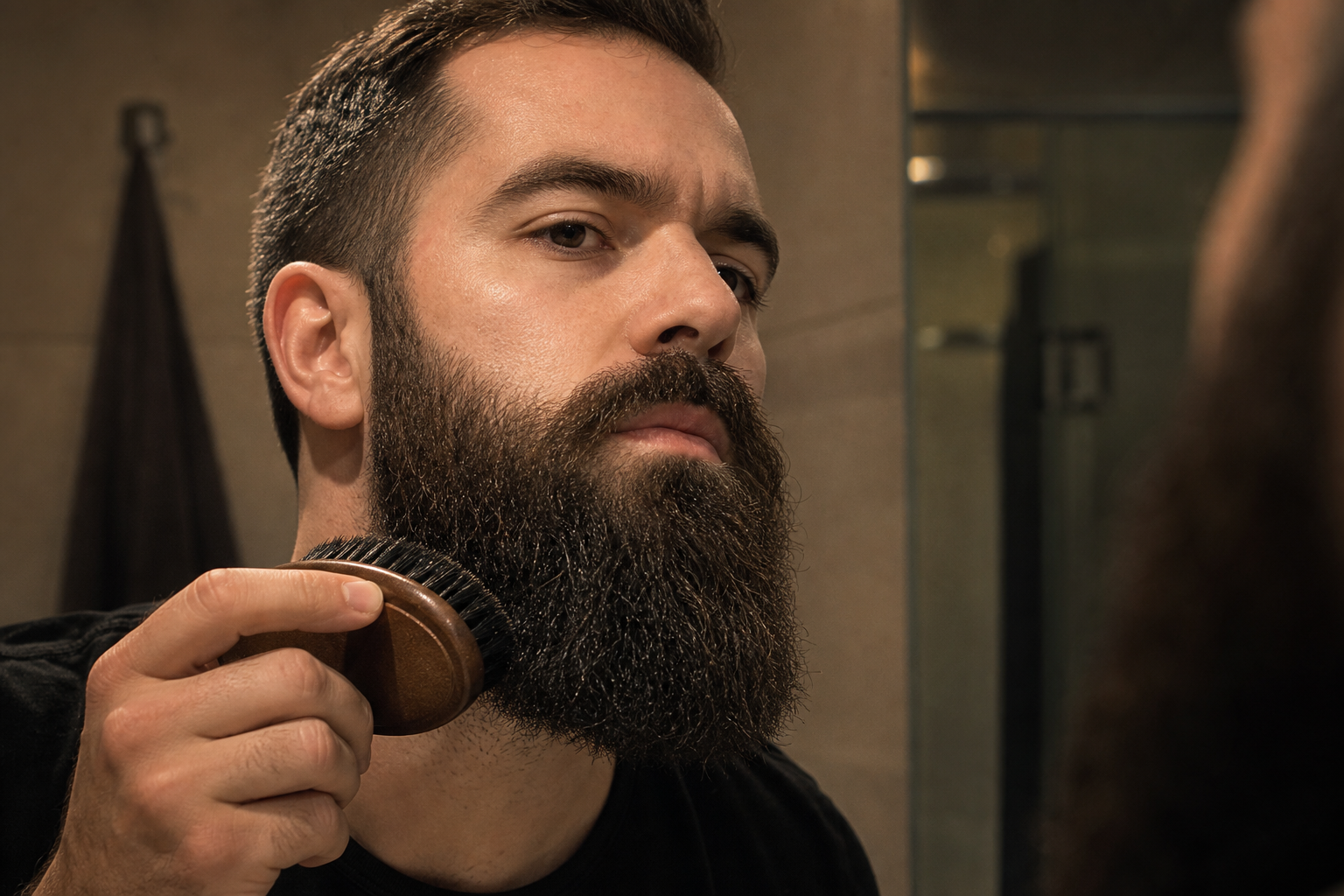
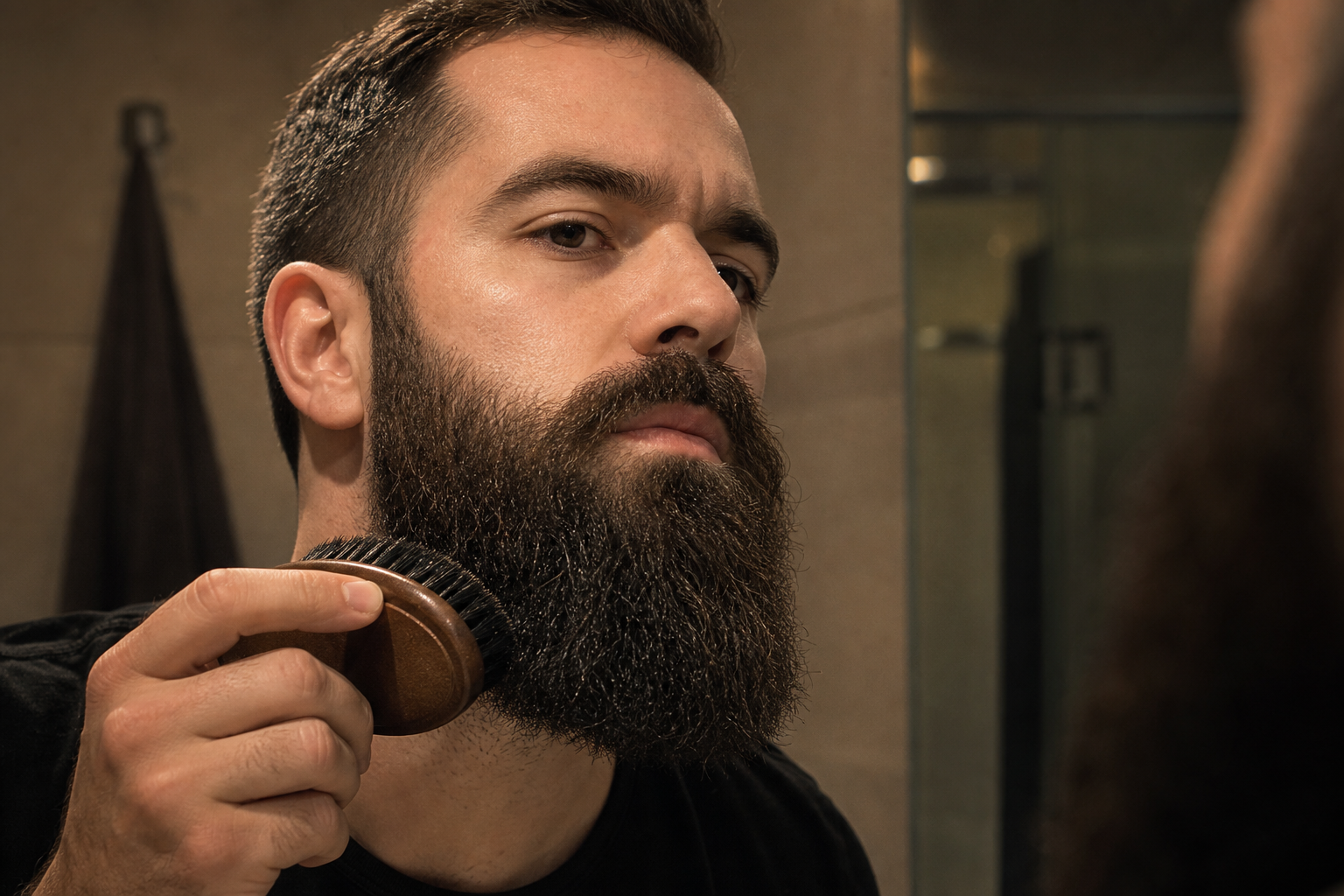
The single most effective tool for managing multi-directional growth is consistent brushing.
When you brush your beard regularly, you are physically training the hair to lay in a specific direction. Over time, the strands develop a memory and start to hold that shape more naturally.
This does not happen overnight. For most guys, it takes two to four weeks of daily brushing before the effect becomes noticeable. But once it clicks, the difference is significant.
Use a boar’s hair brush for this. The bristles are firm enough to redirect the hair but gentle enough to avoid pulling or damaging the strands.
Start from the neck and brush downward and outward. Work your way up to the cheeks and then the mustache. Always brush in the direction you want the hair to go, not the direction it naturally grows.
Brushing gets the hair into position. Product keeps it there.
For beards that resist staying in place, a beard balm provides a light hold that helps strands maintain the direction you brush them into. The beeswax and shea butter combination creates a flexible hold without making the beard feel stiff or crunchy.
If you have a particularly stubborn area, like a patch under the chin that curls upward, applying a small amount of balm to that spot and brushing through it can make the difference between a beard that looks shaped and one that looks chaotic.
Beard tamer is another option for guys who need more control. It provides a stronger hold than balm and works especially well for areas that refuse to cooperate with brushing alone.
Length changes everything with multi-directional growth.
At shorter lengths, each hair holds its natural angle rigidly. There is not enough weight to pull it into line, and the hair is stiff enough to resist brushing.
As the beard grows past the half-inch mark, things start to improve. The additional length creates weight that naturally pulls the hair downward. Longer hairs are also more flexible and easier to redirect with a brush or comb.
This is why many guys who struggle with unruly growth at two to three weeks suddenly find their beard more manageable at six to eight weeks. The length itself becomes a styling tool.
If your beard looks messy at a short length, consider growing it out a bit before deciding it is unworkable. The extra length might be all you need.
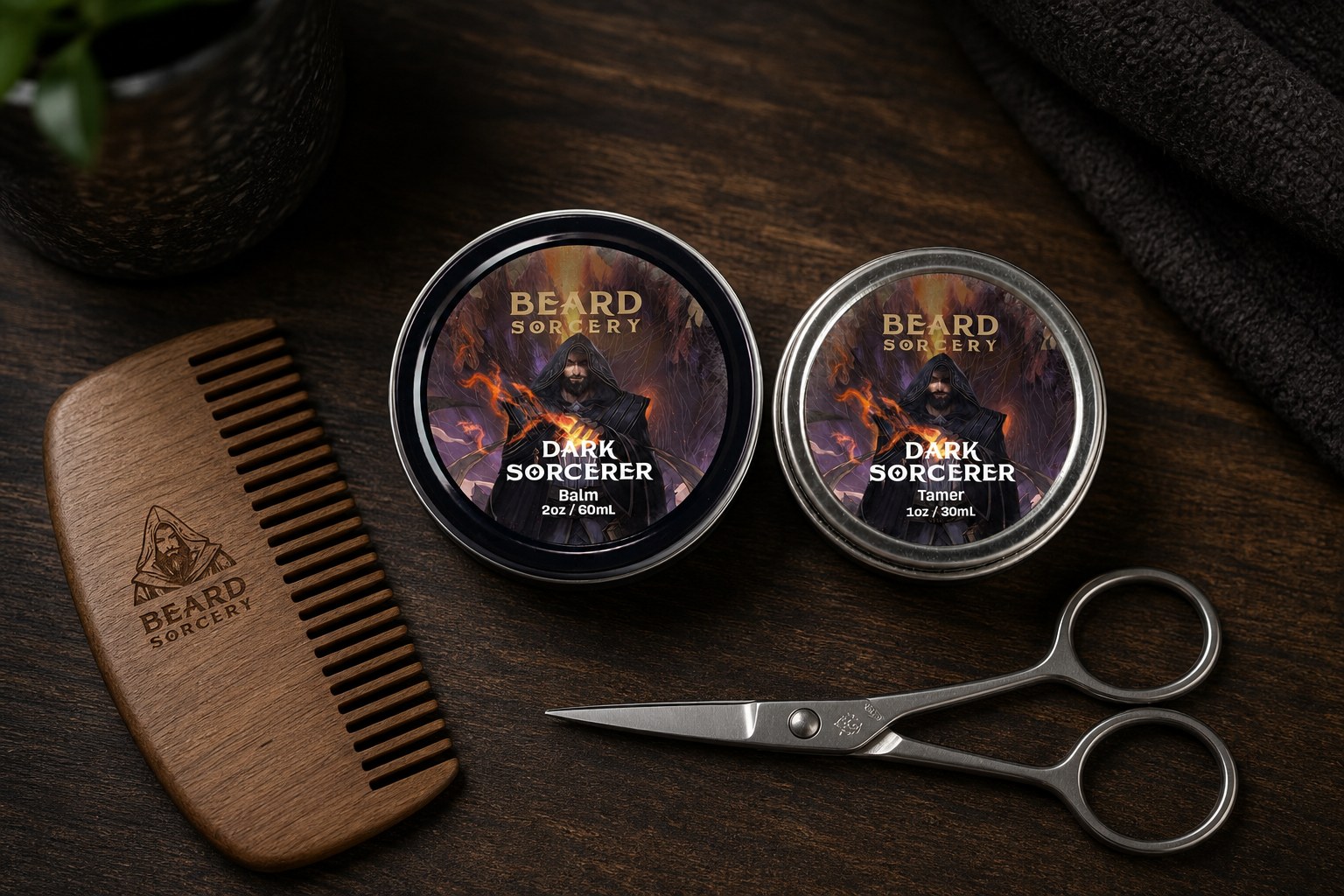
A brush handles the overall direction. A comb handles the details.
For areas where hairs overlap or cross in different directions, running a comb through slowly can separate the strands and align them without creating frizz or pulling.
A sandalwood comb is ideal because the teeth glide smoothly without snagging. Static is also less of an issue compared to plastic combs, which matters when you are dealing with hair that already wants to go in multiple directions.
After combing, follow up with a light application of beard oil to set everything in place and add a bit of weight.
Trimming can help clean up the appearance of multi-directional growth, but it can also make things worse if done too aggressively.
Trimming stray hairs that stick out beyond the natural outline of the beard is usually safe and helps define the shape. This is especially useful on the cheeks, where outward-growing hairs can make the beard look wider than intended.
Trimming the bulk of the beard too short, though, brings back all the problems. The shortened hairs regain their stiffness and pop back to their natural angles.
The best approach is to trim the outline and leave the interior length alone. Let the weight and flexibility of the longer hair do the work of laying things down.
Here is something most guys overlook. A beard does not need to be perfectly uniform to look good.
Some of the best-looking beards have subtle variation in direction. It adds texture and character. The goal is not to force every strand into military precision. The goal is to create a general sense of direction and shape so the beard looks intentional rather than accidental.
If your cheek hair grows slightly outward and your chin hair grows straight down, that is fine. As long as both areas are groomed and maintained, the overall effect works.
Trying to make your beard do something it genuinely cannot do is where frustration lives. Working with your natural patterns and guiding them slightly is where results live.
Multi-directional growth responds best to daily habits.
Brush every morning. Apply product. Comb trouble spots. Repeat.
The beard learns over time. What feels like a battle in week one starts to feel effortless by week four. The key is not skipping days and then trying to fix everything at once. Small, consistent effort adds up faster than occasional heavy-handed sessions.
Your beard has its own character. The goal is not to eliminate it. The goal is to shape it into something that looks like it belongs to you.

Your next read
Walk into any beard grooming aisle and you’ll see the same three products everywhere: beard oil, beard balm, and beard butter. At first glance, they all seem interchangeable. They smell good, they…
Continue the adventure
Level Up
Stop leaving loot on the table. Join the Guild today to start your journey toward exclusive discounts and free potions!
Adventurer’s Welcome
Two d8s decide your discount. New customers and SMS subscribers each add a d4.
4-24% off
Every roll pays 4-24% off. Two dice to start, and up to two more you can earn.Takes 10 seconds · Your code is good for 14 days
What sorcery do you seek?
Search potions, kits, characters, or articles from the Book of Beardcraft.
In our quest to bring our enchanting formulas to a global audience, we embarked on an imaginative journey to reshape our products. Shipping hemp products internationally brought with it a labyrinth of restrictions, prompting us to craft a new blend without compromising the soul of our creations. By excluding hemp ingredients, we opened the possibility for rainbows and scents to travel unfettered across borders. The heart of our brand persists, filled with intoxicating aromas and enchanting blends that enhance experiences universally. Thus, the beloved character of our products remains vibrantly intact, ready to tantalize senses worldwide.
Throughout this reformulation, we also seized the opportunity to make our products more hypoallergenic by removing nut oils. This thoughtful alteration broadens the accessibility of our line, welcoming even those with nut sensitivities. Our choice to incorporate rosehip and safflower oil was no whimsical endeavor; these oils are famed for their enchanting properties. Rosehip oil, rich in vitamins and antioxidants, fosters the skin's radiance and charm, while safflower oil, revered for its lightweight, non-comedogenic nature, ensures a gentle, soothing touch. Together, they promise an experience as authentic as it is revitalizing, draped in warmth and genuine care.
Calling all collectors and dreamers! The new Collector’s Edition box has arrived, and it’s a masterpiece of magic, nostalgia, and excitement. Featuring the Storm Warden, this edition captures the epic struggle between the legendary sailor and the mighty kraken, with every detail crafted to perfection. Whether you're a seasoned collector or just starting out, this release will make your collection shine like never before. It’s more than a box—it’s a celebration of artistry and storytelling, ready to take center stage in your display.
But that’s not all! The exclusive Dark Sorcerer edition, which embodies all the sorcerer’s draconic magic in its intricate design, is still available—for now. This is your final chance to own the edition that started it all, a true piece of history that launched this legendary series. Complete your collection with both the Storm Warden and the Dark Sorcerer editions, and let your display become the envy of collectors everywhere. Don’t wait—treasures like these won’t last long!
Beard Sorcery
Scent tells a story — whispered or boldly declared. Our scale runs from subtle and smooth to intensely powerful, so you can set the tone.