The Book of Beardcraft
The Difference Between a Shaped Beard and a Trimmed Beard
Most guys trim their beards. Far fewer actually shape them. And the difference between those two things is why some bear...
The Book of Beardcraft
Most guys trim their beards. Far fewer actually shape them. And the difference between those two things is why some bear...
Most guys trim their beards. Far fewer actually shape them. And the difference between those two things is why some beards look intentional and others just look maintained. Trimming keeps your beard at a certain length. Shaping creates the form that makes it look like it belongs on your face. One is maintenance. The other […]
 matt
1 month ago
matt
1 month ago
Most guys trim their beards. Far fewer actually shape them. And the difference between those two things is why some beards look intentional and others just look maintained.
Trimming keeps your beard at a certain length. Shaping creates the form that makes it look like it belongs on your face. One is maintenance. The other is design.
If you have been trimming regularly but your beard still looks a little off, this is probably what is missing.
Trimming is straightforward. You take a guard, set it to a number, and run it over the beard. Everything comes out the same length. Maybe you go shorter on the sides and leave the chin a little longer. Basic stuff.
There is nothing wrong with trimming. It keeps the beard tidy, removes split ends, and prevents that unkempt look that creeps in after a few weeks of unchecked growth.
But trimming alone treats every part of your beard the same way. And your beard does not grow the same way everywhere. The cheeks, the jawline, the chin, the neckline, the mustache. Each area has different density, direction, and growth speed.
When you trim uniformly, you get a uniform result. And a uniform result often looks flat, boxy, or disconnected from your face shape.

Shaping means defining the outline and proportions of your beard so it works with your facial structure. It is about deciding where the beard starts, where it ends, and how it transitions between areas.
This includes:
The cheek line. Where the beard ends on your upper cheeks. A clean, defined cheek line makes any beard look more deliberate. Too high and it looks unnatural. Too low and you lose the structure.
The neckline. Where the beard ends under your jaw. This is the single most common area where guys get it wrong. A neckline that sits too high makes the beard look thin from the side. The right neckline follows the natural curve where your neck meets your jaw.
Gradual length transitions. A shaped beard is not all one length. It typically gets slightly longer toward the chin and shorter near the ears and sideburns. This creates a tapered, natural look that follows the contours of the face.
Symmetry correction. Most beards do not grow symmetrically. One side might be fuller or grow faster. Shaping addresses this by trimming the denser side to match the thinner one, creating visual balance even when the growth is not balanced.
It is worth spending a moment on the neckline because this is where shaping matters most and where most guys get it wrong on their own.
The natural instinct is to shave the neckline right along the jawline. It feels clean and crisp. But from the side and front, this creates a flat, two-dimensional look. The beard appears to sit on top of the face rather than growing from it.

The correct neckline sits about one to two fingers above your Adam’s apple, following a gentle curve from ear to ear. This gives the beard depth and fullness underneath the jaw, which is what makes it look substantial from any angle.
If you have been trimming your neckline too high, let it grow out for two to three weeks before reshaping. The transition period looks a bit messy, but the end result is worth it.
A round face benefits from a beard that is longer on the chin and shorter on the sides. This adds vertical length to the face and creates a more angular appearance.
A long or narrow face does better with a beard that has more width on the sides and a shorter chin. This adds horizontal balance and prevents the face from looking stretched.
A square face works well with slightly rounded beard edges and a natural chin length. Keeping everything too angular amplifies the boxiness of the face. Softening the corners adds character.
An oval face has the most flexibility. Most beard shapes work. The key is just maintaining proportions and keeping the outline clean.
The point is not to memorize rules. It is to understand that your beard shape should respond to your face shape, not ignore it.
You do not need a barber for every shaping session, though getting one professional shape as a baseline is smart. A barber can set the cheek line, neckline, and proportions, and then you maintain what they established.
For home shaping, you need a good mirror (ideally one that lets you see both straight on and from the side), a trimmer without a guard for detailing, and a beard comb.
Start with the neckline. Define the curve from ear to ear, about two fingers above the Adam’s apple. Use short, careful strokes. You can always take more off. You cannot put it back.
Next, clean up the cheek line. Follow your natural cheek line for the most part. If your natural line is very uneven, straighten it slightly, but do not carve an artificial line that sits too low on the cheek.
Finally, address proportions. Comb the beard out and look at it from the front and sides. If the sides are as long as the chin, the shape is probably too boxy. Trim the sides down slightly to create a taper toward the chin.
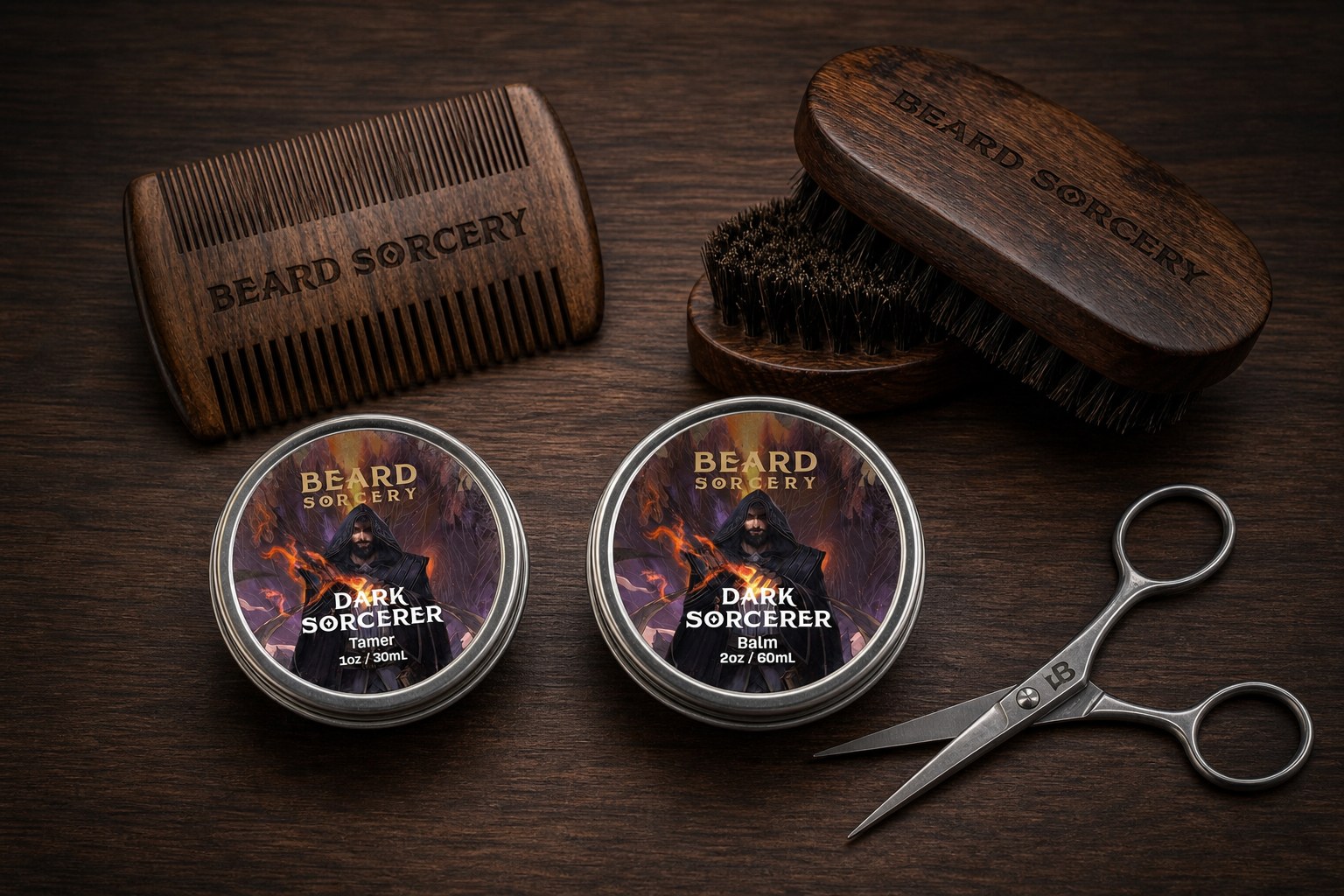
Once you have the shape defined, the right products help maintain it between shaping sessions.
Beard balm provides a light hold that keeps the hair in the direction you brush it. This is especially helpful for maintaining the taper on the sides and keeping stray hairs from poking out of the outline.
For beards that are particularly unruly, a beard tamer gives stronger hold without looking or feeling like you put product in it. It keeps the shape locked in through the day.
A boar’s hair brush is essential for shaping maintenance. Brushing daily in the direction you want the hair to lay trains it over time. After a few weeks of consistent brushing, the beard starts holding its shape with less effort.
If you do go to a barber, communicating what you want is half the battle.
Most barbers default to trimming unless you specifically ask for shaping. Tell them you want a shaped beard, not just a trim. Specify what you want for the cheek line (natural, slightly cleaned up, or sharp), the neckline (where you want it to sit), and the overall proportions (longer chin, shorter sides, etc.).
Photos help. Bring a picture of a beard shape you like. Even if your beard is different in density or texture, it gives the barber a target to work toward.
A good barber will also tell you what is realistic for your growth pattern. Not every face can produce every shape, and an honest barber saves you from chasing something that will not work.
Once you understand the difference between trimming and shaping, your whole approach to beard maintenance changes. Trimming becomes a tool you use within a larger plan, not the plan itself.
Get the shape right. Then use trimming, brushing, and product to maintain it. That is the system that takes a beard from looking like it just grows on your face to looking like you designed it to be there.
Because that is exactly what shaping is. Designing the beard that works for your face.

Your next read
Few things can change the appearance of a beard faster than the neckline. You can have solid beard growth, decent density, and a good grooming routine — but if the neckline is off, the entire beard…
Continue the adventure
Level Up
Stop leaving loot on the table. Join the Guild today to start your journey toward exclusive discounts and free potions!
Adventurer’s Welcome
Two d8s decide your discount. New customers and SMS subscribers each add a d4.
4-24% off
Every roll pays 4-24% off. Two dice to start, and up to two more you can earn.Takes 10 seconds · Your code is good for 14 days
What sorcery do you seek?
Search potions, kits, characters, or articles from the Book of Beardcraft.
In our quest to bring our enchanting formulas to a global audience, we embarked on an imaginative journey to reshape our products. Shipping hemp products internationally brought with it a labyrinth of restrictions, prompting us to craft a new blend without compromising the soul of our creations. By excluding hemp ingredients, we opened the possibility for rainbows and scents to travel unfettered across borders. The heart of our brand persists, filled with intoxicating aromas and enchanting blends that enhance experiences universally. Thus, the beloved character of our products remains vibrantly intact, ready to tantalize senses worldwide.
Throughout this reformulation, we also seized the opportunity to make our products more hypoallergenic by removing nut oils. This thoughtful alteration broadens the accessibility of our line, welcoming even those with nut sensitivities. Our choice to incorporate rosehip and safflower oil was no whimsical endeavor; these oils are famed for their enchanting properties. Rosehip oil, rich in vitamins and antioxidants, fosters the skin's radiance and charm, while safflower oil, revered for its lightweight, non-comedogenic nature, ensures a gentle, soothing touch. Together, they promise an experience as authentic as it is revitalizing, draped in warmth and genuine care.
Calling all collectors and dreamers! The new Collector’s Edition box has arrived, and it’s a masterpiece of magic, nostalgia, and excitement. Featuring the Storm Warden, this edition captures the epic struggle between the legendary sailor and the mighty kraken, with every detail crafted to perfection. Whether you're a seasoned collector or just starting out, this release will make your collection shine like never before. It’s more than a box—it’s a celebration of artistry and storytelling, ready to take center stage in your display.
But that’s not all! The exclusive Dark Sorcerer edition, which embodies all the sorcerer’s draconic magic in its intricate design, is still available—for now. This is your final chance to own the edition that started it all, a true piece of history that launched this legendary series. Complete your collection with both the Storm Warden and the Dark Sorcerer editions, and let your display become the envy of collectors everywhere. Don’t wait—treasures like these won’t last long!
Beard Sorcery
Scent tells a story — whispered or boldly declared. Our scale runs from subtle and smooth to intensely powerful, so you can set the tone.