The Book of Beardcraft
Why Can’t Elves Grow Beards? (D&D and More)
Fantasy is replete with legendary beards. Great kings boast glorious full-beards that embody their regal splendor. Wizar...
The Book of Beardcraft
Fantasy is replete with legendary beards. Great kings boast glorious full-beards that embody their regal splendor. Wizar...
(D&D and More)
Fantasy is replete with legendary beards. Great kings boast glorious full-beards that embody their regal splendor. Wizards are renowned for their flowing beards: a sign of their years of study. Eve…
 matt
2 years ago
matt
2 years ago
Fantasy is replete with legendary beards. Great kings boast glorious full-beards that embody their regal splendor. Wizards are renowned for their flowing beards: a sign of their years of study. Even fantasy races, such as the dwarves, are defined by their big bushy beards – and that’s without mentioning the facial fuzz of dwarf women.
But there’s one fantasy race that stays as fresh-faced as the day they were born: elves.

On first inspection, the difference seems odd. In most fantasy lore, from the Lord of the Rings to Dungeons and Dragons, men, elves, and dwarves can intermingle and intermarry. While they may differ in stature, the general anatomy of these races is seemingly identical. So, what gives?
Tolkien and the Creation of Elves
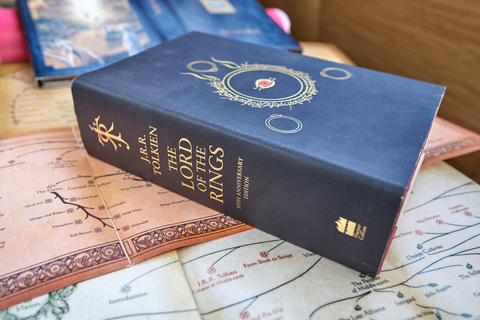
As with all things fantasy, all roads lead to Tolkien: the father of modern fantasy. Originally, Tolkien asserted that elves could not grow beards. But, as he aged, he changed his mind. In Tolkien’s mythology, elves grew older in cycles. It was only upon reaching the third cycle that elves began growing beards.
Thus, Cirdan – the shipwright – had a long beard at the end of the Return of the King. However, the aged-elf was then around 11,000 years old, compared to Elrond, who was a spritely 6,500 years old. There are exceptions, however. An obscure elf, Nerdanel’s father, sported a beard when he was only around 4,000 years old (around the second cycle of life).
The stylistic choice is an interesting one. Tolkien himself never grew a beard. Though the Scandinavian and Anglo-Saxon epics, of which he was an expert, are replete with beard-wearing heroes like Beowulf. Why then did Tolkien opt for a fresh-faced aesthetic?
Being nigh on immortal, elves age but never grow old. Beards, therefore, seem a suitable accompaniment, a sign of their wise and ancient longevity. Yet, in our culture, beards are associated not only with maturity but also old age: something the elves never experience. Thus, being locked in youth, it seems fitting that few elves ever grow a beard. It also diminishes the angelic demeanor. I mean, few picture Gabriel or the archangel Michael with a big bushy beard, nor is quite fitting for the elven prince Legolas.
D&D: Can an Elf have a Beard?
Amongst the D&D community, the subject of bearded elves is a hot topic. A few handbooks have stated that elves can’t have beards: a strict hangover from Tolkien’s legendarium. But that doesn’t mean nobody has ever invented a character with one.
If you want to create an elf with a beard, ask your DM. Perhaps you dream of a swashbuckling elf with a debonair Van Dyke, or an ancient elven librarian with a long, plaited beard.
After all, isn’t that the beauty of fantasy? You can create whatever you can imagine?

Your next read
Beards define characters in fiction. They tell us who they are. Who is the wizard without the long, flowing, silvery beard or the king without a regal mane? Whether a beard is rich and full or scra…
Continue the adventure
Level Up
Stop leaving loot on the table. Join the Guild today to start your journey toward exclusive discounts and free potions!
Adventurer’s Welcome
Two d8s decide your discount. New customers and SMS subscribers each add a d4.
4-24% off
Every roll pays 4-24% off. Two dice to start, and up to two more you can earn.Takes 10 seconds · Your code is good for 14 days
What sorcery do you seek?
Search potions, kits, characters, or articles from the Book of Beardcraft.
In our quest to bring our enchanting formulas to a global audience, we embarked on an imaginative journey to reshape our products. Shipping hemp products internationally brought with it a labyrinth of restrictions, prompting us to craft a new blend without compromising the soul of our creations. By excluding hemp ingredients, we opened the possibility for rainbows and scents to travel unfettered across borders. The heart of our brand persists, filled with intoxicating aromas and enchanting blends that enhance experiences universally. Thus, the beloved character of our products remains vibrantly intact, ready to tantalize senses worldwide.
Throughout this reformulation, we also seized the opportunity to make our products more hypoallergenic by removing nut oils. This thoughtful alteration broadens the accessibility of our line, welcoming even those with nut sensitivities. Our choice to incorporate rosehip and safflower oil was no whimsical endeavor; these oils are famed for their enchanting properties. Rosehip oil, rich in vitamins and antioxidants, fosters the skin's radiance and charm, while safflower oil, revered for its lightweight, non-comedogenic nature, ensures a gentle, soothing touch. Together, they promise an experience as authentic as it is revitalizing, draped in warmth and genuine care.
Calling all collectors and dreamers! The new Collector’s Edition box has arrived, and it’s a masterpiece of magic, nostalgia, and excitement. Featuring the Storm Warden, this edition captures the epic struggle between the legendary sailor and the mighty kraken, with every detail crafted to perfection. Whether you're a seasoned collector or just starting out, this release will make your collection shine like never before. It’s more than a box—it’s a celebration of artistry and storytelling, ready to take center stage in your display.
But that’s not all! The exclusive Dark Sorcerer edition, which embodies all the sorcerer’s draconic magic in its intricate design, is still available—for now. This is your final chance to own the edition that started it all, a true piece of history that launched this legendary series. Complete your collection with both the Storm Warden and the Dark Sorcerer editions, and let your display become the envy of collectors everywhere. Don’t wait—treasures like these won’t last long!
Beard Sorcery
Scent tells a story — whispered or boldly declared. Our scale runs from subtle and smooth to intensely powerful, so you can set the tone.