The Book of Beardcraft
Speaking the Barber’s Language: Protect Your Beard Progress
Few moments in beardcraft are more terrifying than hearing the buzz of clippers and wondering if months of progress are...
The Book of Beardcraft
Few moments in beardcraft are more terrifying than hearing the buzz of clippers and wondering if months of progress are...
Few moments in beardcraft are more terrifying than hearing the buzz of clippers and wondering if months of progress are about to vanish in seconds. Many beard disasters do not happen because the ba…
 matt
5 months ago
matt
5 months ago
Few moments in beardcraft are more terrifying than hearing the buzz of clippers and wondering if months of progress are about to vanish in seconds. Many beard disasters do not happen because the barber lacks skill. They happen because the customer and the barber were speaking different languages.
Barbers work with certain terms and assumptions. If you walk in and simply say “just clean it up,” you may end up losing far more length than you expected. Learning to speak the barber’s language helps ensure you leave the chair with your beard improved rather than reset.

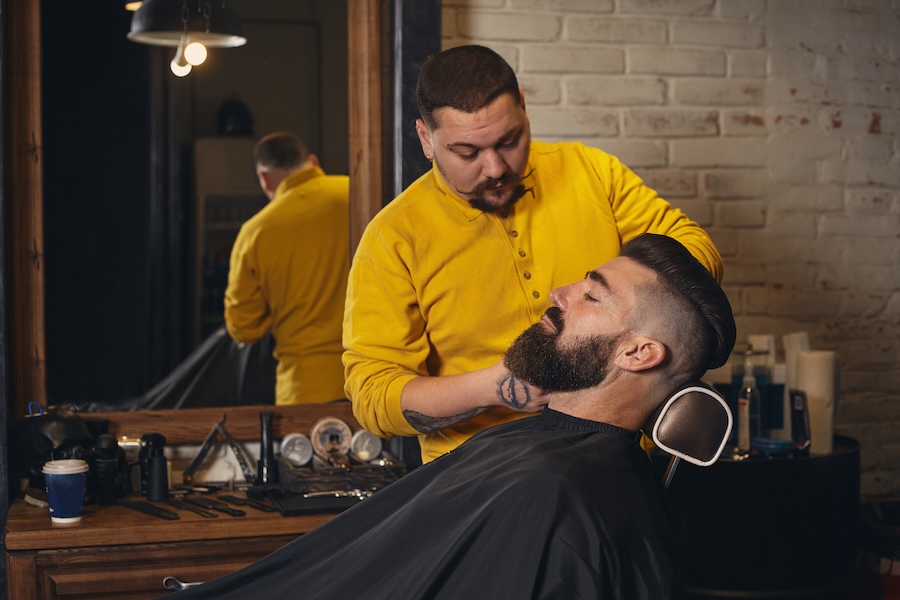
The most important sentence you can say at the start of the appointment is simple. Tell the barber you are growing your beard out.
This signals that length is valuable and should not be aggressively removed. Without that context, many barbers assume the goal is shaping or shortening the beard.
When a barber understands you are in the middle of a growth journey, they are far more likely to focus on tidying edges and removing only obvious stray hairs.

If you want to protect your progress, say it directly. Tell the barber you want to keep the length.
This phrase immediately shifts the trimming strategy. Instead of reducing bulk with clippers, the barber will usually reach for scissors and focus on shaping.
You can reinforce this by saying something like, “Just trim the flyaways and keep the length.” Clear instructions remove guesswork and help the barber understand exactly what you want.
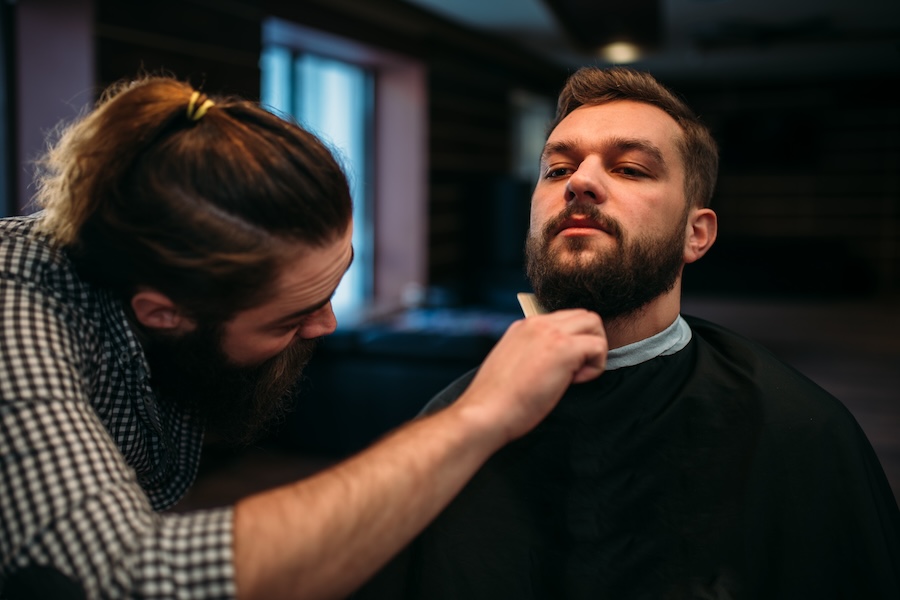
Many beard trims go wrong around the edges rather than the bulk of the beard.
If you want a natural cheek line, say so. If you prefer a defined neckline, ask where they plan to place it before they begin trimming. A neckline that is cut too high can make a beard look much smaller than intended.
Discussing these boundaries before the clippers start gives you control over the overall shape of the beard.
Guard numbers on clippers can mean very different things depending on your beard length.
If your beard has taken months to grow, even a relatively large guard can remove more length than you expect. When discussing guards, ask the barber exactly how much hair that guard removes.
In many cases, it is safer to request scissors instead of clippers when you are maintaining a longer beard. Scissor work allows for far more control and preserves most of the beard’s length.

Sometimes the best communication is visual.
Use your fingers to show how much length you are comfortable losing. Even better, bring a photo of the beard style or shape you are aiming for. A visual reference removes ambiguity and gives the barber a clear target.
Barbers appreciate this because it makes their job easier. Instead of interpreting vague instructions, they can work toward a specific result.
Your beard represents months or even years of patience. Protecting that progress begins with clear communication when you sit in the barber’s chair.
By telling the barber you are growing your beard out, asking to keep the length, and discussing the details before the clippers turn on, you dramatically reduce the chance of a trimming disaster. When you learn to speak the barber’s language, you stay in control of your beard’s journey instead of leaving it to chance.

Your next read
Few things can change the appearance of a beard faster than the neckline. You can have solid beard growth, decent density, and a good grooming routine — but if the neckline is off, the entire beard…
Continue the adventure
Level Up
Stop leaving loot on the table. Join the Guild today to start your journey toward exclusive discounts and free potions!
Adventurer’s Welcome
Two d8s decide your discount. New customers and SMS subscribers each add a d4.
4-24% off
Every roll pays 4-24% off. Two dice to start, and up to two more you can earn.Takes 10 seconds · Your code is good for 14 days
What sorcery do you seek?
Search potions, kits, characters, or articles from the Book of Beardcraft.
In our quest to bring our enchanting formulas to a global audience, we embarked on an imaginative journey to reshape our products. Shipping hemp products internationally brought with it a labyrinth of restrictions, prompting us to craft a new blend without compromising the soul of our creations. By excluding hemp ingredients, we opened the possibility for rainbows and scents to travel unfettered across borders. The heart of our brand persists, filled with intoxicating aromas and enchanting blends that enhance experiences universally. Thus, the beloved character of our products remains vibrantly intact, ready to tantalize senses worldwide.
Throughout this reformulation, we also seized the opportunity to make our products more hypoallergenic by removing nut oils. This thoughtful alteration broadens the accessibility of our line, welcoming even those with nut sensitivities. Our choice to incorporate rosehip and safflower oil was no whimsical endeavor; these oils are famed for their enchanting properties. Rosehip oil, rich in vitamins and antioxidants, fosters the skin's radiance and charm, while safflower oil, revered for its lightweight, non-comedogenic nature, ensures a gentle, soothing touch. Together, they promise an experience as authentic as it is revitalizing, draped in warmth and genuine care.
Calling all collectors and dreamers! The new Collector’s Edition box has arrived, and it’s a masterpiece of magic, nostalgia, and excitement. Featuring the Storm Warden, this edition captures the epic struggle between the legendary sailor and the mighty kraken, with every detail crafted to perfection. Whether you're a seasoned collector or just starting out, this release will make your collection shine like never before. It’s more than a box—it’s a celebration of artistry and storytelling, ready to take center stage in your display.
But that’s not all! The exclusive Dark Sorcerer edition, which embodies all the sorcerer’s draconic magic in its intricate design, is still available—for now. This is your final chance to own the edition that started it all, a true piece of history that launched this legendary series. Complete your collection with both the Storm Warden and the Dark Sorcerer editions, and let your display become the envy of collectors everywhere. Don’t wait—treasures like these won’t last long!
Beard Sorcery
Scent tells a story — whispered or boldly declared. Our scale runs from subtle and smooth to intensely powerful, so you can set the tone.